CHPSPO Meeting Notes – December 15, 2015

CHPSPO Meeting Notes

Brent Elementary

December 15, 2015


1) 3-8th grade PARCC results presentation by Bonnie O’Keefe OSSE

  • Reviewed PARCC Results and handed out one-page guides to the new assessment –> PARCC one pager.
  • New student reports have been designed for DC – mockups and a parent guide are available on the OSSE website in 6 different languages. Schools will get the individual student test results this week. Each school has the option for when and how to distribute those scores to parents. Parents will receive a copy of the parent guide with their child’s report card.
  • PARCC v DC CAS comparison: DC CAS had composition and reading test, PARCC has only one English Language Arts (ELA) test. General level of rigor is much higher on the PARCC assessment.
  • Because this is the first year of PARCC, there were no new identifications to put schools into focus or priority status (i.e. not meeting their goals). However, if schools already in focus or priority status made progress on certain criteria on the 2015 test, they can be removed from that status.
  • The new Every Student Succeed Act (ESSA) – the rewrite of the No Child Left Behind Law and the law that will supersede current state waivers – will change state accountability systems. There is more flexibility for states, but some of the rules have changed to in what is required for states in their accountability systems. For example, how OSSE will use test scores will change. But the use of PARCC as the test and the use of the new report cards will not change. Under the new law, OSSE will have 18 months to finalize a new plan with the U.S. Department of Education.
  • Joe Weedon: The State Board of Education will have to approve the OSSE plan and there will be public hearings on what the new accountability plan throughout the Spring and Summer of 2016. The Board is particularly interested in equitable access issues and competency based education.
  • PARCC defines college and career readiness as the 70% likelihood a student would earn credit in an entry level college course (scoring a level 4 or 5 in PARCC).

2) DCPS Budget 101 Presentation (Laura Marks and Anne Phelps from Councilman Allen’s office and Joe Weedon from SBOE)

  • Overview of Budget Process
    • Capital budget and operating budget are the two big pots of funding. You can’t transfer money between them. School modernizations are in the capital budget. Everything in the school walls comes from the operating budget.
    • Budget is about $12 billion per year for the city (federal, private and local funding). Of that, $7 billion is from local funds that can be moved around. 27% of those funds are dedicated for education – the highest percentage of the local budget.
  • Current 2016 DCPS Budget (compared to 2015)
    • No increase in uniform per-pupil funding formula.
    • Capital budget reduced by $330 million over 5 years out of the education sector; Ward 6 school modernizations cut $125 million (though they agree to the current year plus 5 years out when they do capital budgets, they can reassess and change them each year). Overall, the DC 6-year capital plan is $1.3 billion.
    • “At-Risk” Funds are being distributed on need. The original intent is for those funds to follow the at-risk students, but that hasn’t happened in past. This budget makes the effort to get the funds into the schools that qualify. Councilman Allen and others are now interested in knowing whether the funds are being used to supplement not supplant funds in individual schools. Council will continue to look into that through oversight.
    • Extended Day funding is increased, aftercare funding reduced. Councilman Allen is interested in learning more about the effects extended day has on aftercare offerings and how effectively the extended day funding is being used at schools.
  • FY2017 Budget Process has Kicked Off
    • November – normally the Chancellor outlines her priorities, but this year we are still waiting to hear what DCPS will identify as their big funding priorities
    • Now: Parent and community survey online – place to weigh in on budget priorities (November-December) engagedcps.org
    • November: DCPS held citywide LSAT planning and training meetings (three done)
    • Now: Chancellor team in process of identifying school enrollment targets and a modernization plan
    • Feb-March: School, LSAT and DCPS work to finalize school budgets
    • In the first 2 weeks of March, DCPS has to wrap up the back and forth with the schools to submit to Mayor’s budget team
    • Date to submit Mayor’s proposed budget to Council is March 24th.
  • Council Role
    • Once the Mayor submits the budget to Council, Council has 56 days (by law in the Home Rule Act) to hold hearings, develop priorities, develop a committee chairman’s budget, then the full committee amend and vote on the committee budget
    • Performance oversight hearings: February 4 – March 11, 2016
    • Budget oversight hearings: April 6-28, 2016
    • May 4 and 5 committee budgets go to the committee of a whole to reconcile all the budgets
    • May 17th there is a reconciliation vote – vote on the entire budget package
    • In the Operating Budget, Council cannot amend the DCPS operating budget easily or at all because even if they have a directive put in to change the operating budget, the Chancellor can reprogram that money. DCPS is a unique circumstance. For example, in the library budget, Council can direct more of the funds. But Council can move around priorities in the Capital budget.

What can parents do:

  • Advocates: Now is the time to focus on advocating at the school level for the right operating budget for the school – with the Principal, LSAT, and parents – to work with DCPS to achieve priorities. For issues across schools, need to advocate with the Mayor and Chancellor on city-wide programmatic funds.
  • Advocates: On Capital side of the budget there is less ability to manipulate the budget than before, but still some ability. But there needs to be coordinated prioritization particularly in Ward 6.
  • Now is the time to start pushing priorities.
  • Two big asks could be: more money in school modernization/capital budget overall, and increases in the per pupil funding formula.
  • DCPS does not fund schools on a per student basis. They fund on a staffing model (see below).
  • Operating Budget Issues – Where can we influence DCPS funding?
    • Key is enrollment projections. If 300, 350, 400 there are different staffing models.
    • Still elements of the budget where the principal and LSAT can advocate within the DCPS process.
    • LSAT has a “School Budget Development Guide” put out by DCPS that can be a tool to help. It often lays out elements that DCPS is changing in terms of priorities and what is changing in terms of school and district funding and thresholds. The FY17 version is not yet available of this guide. Parents need to ask principals for this guide. They may need to ask DCPS for it.

What can parents and advocates do?

  • Ask your principal: what is the projected enrollment number from DCPS (now is when they are asking for adjustments). By Dec 18th the enrollment numbers will be final.
  • Ask principal/LSAT for the latest “School Budget Development Guide” and read and understand the parameters for how DCPS will build the draft school budgets this year.
  • Work with principal and LSAT – now – to align school budget to community priorities. Discuss what trade-offs have to be made and how collectively the community can work on priorities.

3) CHPSPO School Modernization Advocacy

  • CHPSPO feels we need more priority on the school modernization budget overall – arguing that overall and Ward 6 need more funding for the capital budget. Funds should be restored and increased overall.
  • CHPSPO will start working with the Deputy Mayor and Mayor and make an effort to increase the capital school budget overall and for Ward 6 in particular.

Next CHPSPO Meeting:  January 19, 2016

Upcoming Events  (inclement weather may impact schedules – please confirm open house dates w/ individual schools -see http://www.myschooldc.org/calendar/ )

January 5 – Amidon-Bowen Open House, 9:30-10:30 am

January 7 – Ludlow-Taylor Open House, 9:30-10:30 am

January 8 – Jefferson Academy Open House, 9:30-11:00 am

January 11 – Maury ES Open House, 9:00-10:30 am

January 11 – Brent ES Open House, 9:00-10:30 am

January 11 – Capitol Hill Montessori at Logan EC Open House, 6:00-7:00 pm

January 11 – Maury ES Open House, 6:15-7:45 pm

January 14 – J.O. Wilson ES Open House, 9:30-11:00 am

January 14 – Miner ES Open House, 9:30-10:30 am

January 14 – Eastern HS Open House, 5:30-7:00 pm

January 14 – Jefferson Academy MS Open House, 6:00-7:00 pm

January 14 – School Within a School @ Goding Open House, 6:00-7:30 pm

January 15 – Tyler ES Open House, 6:00-7:00 pm

January 19 – Walker-Jones EC Open House, 9:00-10:30 am

January 19 – Tyler ES Open House, 9:30-10:30 am

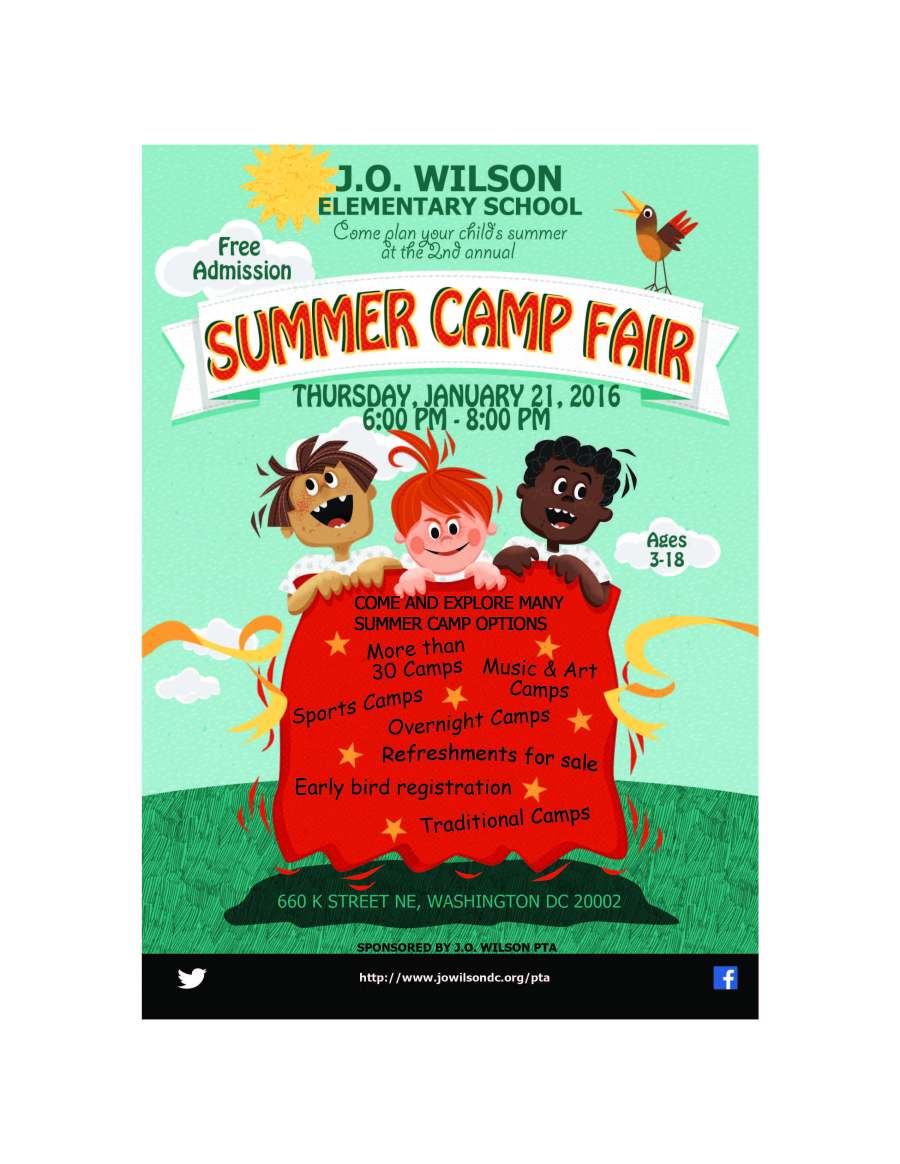
January 21 – J.O. Wilson Summer Camp Fair, 6 – 8 pm
CHPSPO Meeting Notes – November 17, 2015

Miner Elementary School, 601 15th St., NE

November 17, 2015, 6:30 p.m. – 8 p.m.


1) Keep Calm and Substitute Teach – How DCPS plans/budgets for substitutes, and why/how to become a substitute – Suzanne Wells, Tammy Alexander and Heather Schoell

  • Principals can name request parents to be subs
  • John Isabella (DCPS) reported– substitutes pool fills 200-300 requests per day. 90% of requests are filled.
  • Substitutes fill in for teachers and aides.
  • Schools get budget but rolled into teacher salaries.
  • Substitute are licensed by OSSE
  • Substitute must deliver a 5 min prez/lesson – those who meet the bar, go on to background check
  • DCPS sees sub pool as a pool of potential teachers;
  • Subs can put in name for a specific school (and schools can request specific subs)
  • Every teacher is supposed to leave a file w/ lessons

2) High School Credit Flexibility – Mary Lord, At-Large Member State Board of Education ESEA – reauthored

  • State board trying to innovate/engage public
  • How to focus more on learning and the learner – free up teachers and students to innovate & allow students struggling to get the time they need and those who excel to be able to accelerate
  • Move towards mastery-based (or performance-based) learning.
  • Q: How to assess mastery

3) Wilson Building Visits, December 4 – Ivan Frishberg 9-Noon

  • Requests to meet with Chairman Allen (11 AM)
    • Mendelson
    • Grosso
    • Bonds
    • Todd
  • Issues – modernization – process and what is happening at the schools and cross sector collaboration task force (Key issues under cross-sector task force to be refined)

4) Eliot-Hine Update – Roni Hillmon and Heather Schoell

  • Watkins to be renovated 2016-17 / Looking at swing space at Eliot Hine
  • Promises to Eliot-Hine
    • HVAC (promised by may 2015)
    • Tech in each classroom
    • Room in need of repair (leaks into classrooms); mold/air quality
    • Dec 9 next PTO meeting – 6PM in library. Patrick Davis, lead


Next CHPSPO Meeting:  December 15, 2015


Upcoming Middle School Open Houses

Nov 16, (Monday) 9:00-10:30 am: Capitol Hill Montessori at Logan, Upper Elementary and Middle School Open House (http://capitolhillmontessorischool.org/)

Nov 17, (Tuesday) 9:30-10:30 am and 6-7:00 pm: Eliot-Hine Middle School Open House (www.eliothinemiddleschool.org)

Nov 19, (Thursday) 9:30-10:30 am and 6-7:00 pm: Stuart-Hobson Middle School Open House (http://www.capitolhillclusterschool.org/)

Nov 20, (Friday) 9:30-11:00 am: Jefferson Academy Open House http://www.jeffersontrojans.org/)


CHPSPO Meeting December 15 at Brent


Just a reminder that CHPSPO will meet Tuesday, December 15, from 6:30 – 8 p.m. at Brent (301 North Carolina Ave., SE). We will discuss the PARCC test results for 3rd-8th graders, have a DCPS budget 101 discussion led by Anne Phelps and Laura Marks from Councilmember Allen’s office and Joe Weedon, our State Board of Education representative, and plan for additional visits to the Wilson building to discuss the importance of prioritizing school modernization funding. Our agenda is attached.
At our November meeting, we discussed DCPS’ process for obtaining substitutes for schools. Attached is a fact sheet on how to become a substitute for DCPS. Please share this information with you school communities.
Hope to see you on Tuesday.
Suzanne Wells

121515 CHPSPO Agenda.docx

DCPS Sub Hiring Process

CORRECTION: CHPSPO Meets Tuesday, November 17 at MINER

CHPSPO will meet on Tuesday, November 17, at Miner Elementary (601 15th St., NE). We’ll be discussing how DCPS plans for substitutes and how to become one, the high school credit flexibility considerations being discussed by the State Board of Education, and plans for CHPSPO members visiting the Wilson Building in December.

November is a busy month for middle school open houses. Please share with your school communities.

Nov 16, (Monday) 9:00-10:30 am: Capitol Hill Montessori at Logan, Upper Elementary and Middle School Open House (http://capitolhillmontessorischool.org/)

Nov 17, (Tuesday) 9:30-10:30 am and 6-7:00 pm: Eliot-Hine Middle School Open House (www.eliothinemiddleschool.org)

Nov 19, (Thursday) 9:30-10:30 am and 6-7:00 pm: Stuart-Hobson Middle School Open House (http://www.capitolhillclusterschool.org/)

Nov 20, (Friday) 9:30-11:00 am: Jefferson Academy Open House http://www.jeffersontrojans.org/)
Hope to see you on Tuesday.
Suzanne Wells
http://educationdc.net

111715 CHPSPO Agenda.docx

image.jpg

Substitute Fingerprinting Process hs 111015.docx

Middle School Open Houses Kick off the week of Nov 16!

‘Tis the season for Open Houses! Middle School Open Houses within CHPSPO schools kick off the week of November 16, 2015!

Check out the dates below and be sure to double-check with the school, as changes could happen due to weather, etc.

DCPS FY17 Budget Public Hearing Notice

Dear Capitol Hill Public Schools Parent Organization members,

Below is information about the DCPS budget hearing that will be this Wednesday, November 4th at 6 p.m. at Stuart Hobson Middle School.

Suzanne Wells

CHPSPO Meeting Notes – October 20, 2015

Capitol Hill Public Schools Parent Organization
Maury Elementary School, 
1250 Constitution Ave., NE

October 20, 2015, 6:30 p.m. – 8 p.m.

  1. PARCC test results and Cross-Sector Collaboration Task Force (Claudia Lujan)
  • PARCC Results
    • Timing:
      • District-wide @ school level for high schools out next week
      • District-wide @ school level for grades 3-8 out end of November
      • Student –level data out in December
    • This is a BASELINE Year.
    • We will not be able to compare PARCC with past (DC CAS) data.
    • OSSE will pause on accountability for one year; schools will not be able to move from rising to reward, etc.
    • OSSE report to go out to parents in December, to enable parents to understand where students lie on new scale and the 5 performance levels (but not comparable to past). See how to read the PARCC here.
    • Q/A:
      • At district level, we will compare how we are faring w other districts; school level comparisons will be available; Peer group = other states that are using PARCC
      • Is OSSE sticking w/ the cutoffs of proficiency on the PARCC scale? A: Yes, DCBOE voted to keep to PARCC scale, rather than own scale.
      • How were technical glitches been addressed? These would have impacted scores.
        • A: In rollout, from tech perspective and questions, a lot was done to gauge
        • A: Report around glitches will be developed, but not sure about timing
      • Concerning that scores are being shared publicly when tech issues are known; A: this should be considered as input to FAQs that will be released w/ scores
      • From an administration perspective, changes this year:
        • Only 1 testing window as compared to last year’s 2 testing window
        • OCTO supported the hardware in the past, but hoping this year, if OCTO could set up the computers so they are ready w/out pop up windows/hiccoughs, would be really helpful.
      • Professional development (PD) for common core? How is it being addressed? A: PD is addressed at LEA/school level, not district-wide. Teachers participated in developing questions that were included in localized PARCC DC test
  1. Cross-Sector Collaboration Task Force Update (http://dme.dc.gov/node/1106612):
  • Received many nominations (90ish) for parent/community members, were overwhelmed, now sifting through; Separate nomination process for LEAs
  • Announced in a couple of weeks; will kick off in January 2016
  • TF will meet monthly; 1 year commitment of the 2 year process
  • Initial target 23-25 members in task force, but not over 30
  • Q&A:
    • FAQs said meetings would be private – open meetings act requires government committee meetings to be open to public – A: Closed meetings reasoning: difficult conversation. Important to have honest conversations; would open meetings compromise this? Risk of media/social media taking statements out of context
  • What is actionable? Mayor has no authority over PCSB. A: While PCSB is authorizer, charter leaders will be engaged and they understand that lack of coordination cannot continue. Many charter leaders have expressed willingness to coordinate.
  1. DCPS-led discussion about the upcoming food services contract (Shanita Burney)
  • Liz Leach (DCPS OFNS) – history of food services contracts; $19M going back to DCPS from settlement; RFP will go out in December; We cook in every single kitchen in DCPS except Rev Foods schools
  • Feedback from parents in the room:
    • Ben Feldman (Brent ES)– addressed history of Chartwells contract, issues with outsourcing; noted Chancellor did not join whistleblower suit
    • Heather Schoell (Eliot-Hine MS)– can we use settlement money for library books?
    • Q from JO parent about food waste
    • Miner parent (w/interpreter) — Do not like Prepackaged, processed, high sugar items
    • Concern about being cut out of “boutique” groupings of schools
    • Ward 1 parent(?) — Concern about survey; Half of the survey being about student preference
    • Standards fall during summer meals program
    • Unhealthy choices at school make it hard to hold the line at home
    • Group meals at Title I schools end up reinforcing high-sugar food preferences
    • Let’s have oatmeal, low sugar yogurt;
    • Caryn Ernst (Capitol Hill Cluster Schools) – how to make menus more accommodating for gluten-free students (same for allergies, lactose-intolerant)
    • Salad Bars — more days, more options – kids eat plenty of vegetables that way
    • Gwenn (sp?) — Bbq chicken, blackened tilapia, etc — are those items too spicy, seasoned?
    • Heather – vendors off menu is real problem for kids with dietary issues, allergies
    • Make sure all the equipment is working — foods too cold, not high quality
    • Lisa Miller – kids subbing milk for juice
    • Developmentally appropriate portions, menus — PK3 – 4 / K – 5 different choices by age
    • Ben Feldman — We are an 80% FARM district. We have to do food as a core mission. Focus on scratch-made food, locally sourced meals. Focus on vendors who ensure staff have strong culinary skills, care about presentation, good food smells.  Food experience that shows we’re investing in children. RFP needs to be tilted in a way that knife skills, culinary experience, cultivates palates, scratch-made, on site, appealing food
    • W1 parent (?) — More technical concerns. DCPS meal costs are among the highest in the country but we’re not seeing the return on investment. Advantage of privatization should be higher quality, lower costs. We’re not seeing that. What is DCPS going to do to drive up the quality of the food? In-house food service in other districts returns a profit.
    • We’re paying the money but we’re not getting results.
    • Are you breaking down the schools into pods for bidding? A: Liz Leach — Bidding on single schools isn’t efficient for vendors.
    • Payne ES Parent – other countries serve soups; A: LL: Great idea. We don’t have the equipment right now.
    • Parent (Gail) – single vendor? A: LL – TBD
    • Always milk? A: LL – Well, we could sell water. Laura Marks/: No! (we have DC Water!!)
    • Sandra (Capitol Hill Montessori at Logan): What about disconnect between school and vendor? What is the DCPS oversight over vendor? A: LL: There is oversight and management Cafeteria Lead who is site manager, manager over that with 10 schools, 3 managers over that, DCPS personnel over that.
    • Give feedback/ideas here! http://www.engagedcps.org/posts/5847/parent-feedback-needed-for-the-office-of-food-and-nutrition-services
  1. Planning for November discussion about substitute teachers (Moved to next month’s agenda)

Next CHPSPO Meeting:  November 17, 2015

Upcoming Events

October 28 from 7 – 9 pm, SHAPPE/DC Fiscal Policy Institute Forum on DC Public Schools’ Budget Priorities, , Luke Moore Academy, 1001 Monroe St., NE.

November 2, 11 am, JAWB: DC Council Education Committee Hearing On DCPS School Modernizations

November 7, 10 am Educator Town Hall Curbing School to Prison to Pipeline

November 8, 6 – 10 pm, J.O. Wilson will host the 4th annual Taste of H.  Tickets can be purchased at Taste of H.

For additional Education Committee Hearings and Meetings, go to http://www.davidgrosso.org/education-committee/

Testimony of Benjamin Feldman – DCPS Food and Nutrition Service Program – September 30, 2015

September 30, 2015

Testimony of Benjamin Feldman, DC Resident and DCPS Parent

Members of the education committee:

Thank you calling this important hearing on food and nutrition services and for the opportunity to testify before the committee.

I am the parent of an elementary school student in a DCPS school. My son does not eat the food served in his school, I would like this to change but there’s work to be done before that will happen.

The bulk of my testimony addresses the need for fundamental change in the way DCPS/PCS views the role of food and nutrition in the education system. Once we put food into proper perspective, the procurement priorities become much clearer, and quite different, from historic practices.

Food and nutrition services needn’t be a DCPS core competency. But the approach to, and delivery of, food services needs to reflect the centrality of food, and the food experience, to educational readiness and student well-being. If DCPS isn’t going to “own it” the vendor the District selects should understand and commit to providing services that meet these lofty aspirations.

I would like to discuss three issues:

1) Food has transformative potential, but not just any food served any way. We need to think about real food, made from scratch and served by familiar faces.

2) Models for food and nutrition services that can harness the potential of real food; local sourcing, heritage recipes, fresh ingredients, passionate people creates visible social and emotional investment in children.

3) Value and values we should demand from vendors.

A. Food is essential. It’s much more than fuel; it is what binds us together as families and communities. We break bread together, we think of grandma’s house at celebration times, kitchen smells, family sounds. Food memories are permanent and definitional, sweet potato pie, roast turkey, greens, we can be transported through taste and food experience.

We all know food done right is a very powerful thing and can have transformative impact on our youth. Part of it is nutrition value, and DC has done well with the Healthy Schools Act. But, as a majority minority and high poverty school district where children face tremendous challenges, we need to tap into a much broader set of benefits that food done right can provide.

We need to provide our students with visible, tangible and authentic symbols of our investment and care for them. We need to walk the talk, and one of the best ways to show this investment is committing to providing, fresh, scratch-made delicious food served by people who are proud of what they are making and who they are serving.

It’s not that complicated; delicious scratch-made food is an act of love, and this city’s kids need to know they are loved. This is what it means to feed someone in the fullest sense. If we can give this to our students it will really change how they feel, not just being full, and well fed, but also well cared for. A lot of our kids really need this. The experience will also foster a love of good food, and food habits that last a lifetime.

B. What would great food service look like? Alas, we know it can’t be grandma’s kitchen. But, Students should know that the food is good, the people making and serving it care about food and want the kids to like it and want it to nourish them in a complete sense.

It’s a question of both food origins and a service ethic. In terms of food sourcing, the provider needs to be committed and connected to the local food shed, sourcing locally, taking advantage of seasonal varieties and sustaining the local economy.

Menu creation must be based on the pursuit of excellence in flavor, freshness and nutrition. We should also encourage vendors to incorporate heritage foods that resonate with our diverse communities and restore food connections that have frayed, particularly for families residing in food desserts.

Attitude is also tremendously important. Kids have amazing radar when it comes to detecting sincerity and BS. Fake food served with a fake smile won’t cut it, no matter how hard “big food” and Madison Ave. try to package it. We need our kids’ food to be served by enthusiastic employees who know where the food came from, had a hand in preparing it and are proud of what they are serving. And, attitude comes from the top. The vendor’s core mission has to be about investing in kids through food and nutrition, not simply maximizing revenue and profits.

C. What to look for in a vendor. We know what didn’t work; corporate, big food provider Chartwells/Compass bilked the District for tens of millions of dollars while failing to provide our kids with quality food. While Chartwells stipulates that its settlement with the District is not an admission of wrongdoing, forking over $18 million is certainly an indication something wasn’t kosher. And, in truth it’s not really about Chartwells. All the big vendors are the same, they are focused on “Big Food” and “Big Ag” and using the factory food model to serve meals. It’s the same factory food model that has given us an unhealthy population where individuals suffer malnutrition, diabetes and morbid obesity at the same time. This is the wrong model and it will lead to the wrong results.

So, what’s the alternative? I don’t know who it is but I know what they should look like. Our vendor should be local, connected to our regional food shed by relationships with actual producers and familiarity with on-farm practices. It should be a food-centric business, about making and serving great food within our food shed, it should be values-driven and transparent. We need a vendor with true open book policy that allows the District to understand all its costs and expenses—particularly if we are going to use a cost-reimbursable model.

Finally, the vendor should be community focused and accountable. By community focused, I mean that return to community, rather than merely shareholders, is an integral part of the business model. We need a company that is swimming against the tide of factory food, and looking to restore the connections between food and people. It’s a really different model and shouldn’t involve SYSCO trucks or frozen pizza.

And, because it is such a different model, we need to reach out beyond the typical players and find a real partner. This should mean very different bid evaluation criteria when the city puts the contract out to bid.

This may mean taking risks because the District should hire a company that isn’t in the school lunch business—so it can re-imagine what the dining experience should be, rather than replicate a failed model. There are plenty of risk management tools that can be used to ensure vendor performance, even for new entrants, and the City is more than capable of doing so. It’s a much better use of taxpayer resources than hiring another “Big Food” vendor that doesn’t share our values or invest in our community.